Body Language for Public Speaking
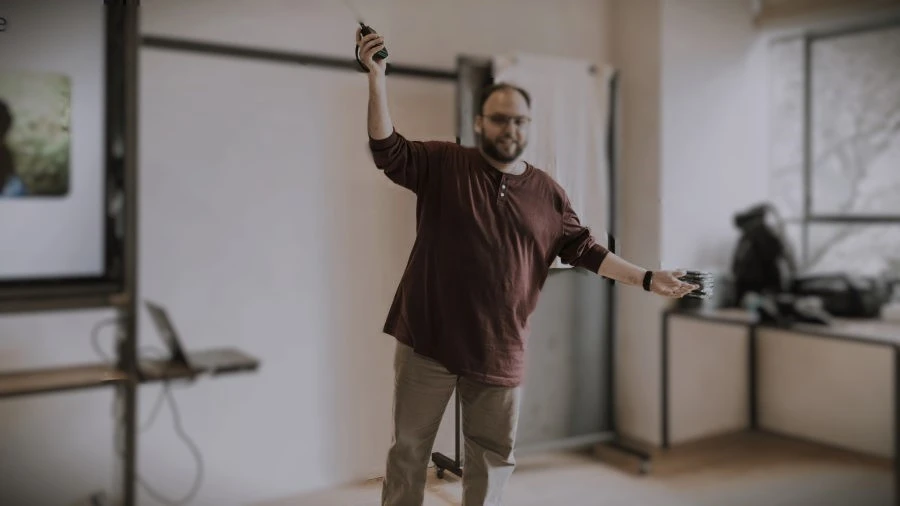
Body Language as Signal Clarity
Body language is the physical layer of communication that operates continuously while you speak. Your posture gestures and movement create a parallel message that either reinforces or interferes with your words. In public speaking this physical message is evaluated immediately and often unconsciously by the audience.
Effective nonverbal communication is not about performing gestures or memorizing techniques. It is about reducing physical noise and increasing signal clarity. When your body movements are aligned with your intent the audience expends less effort interpreting you and more effort processing your message.
Most speaking problems related to body language are not caused by lack of knowledge but by unmanaged nervous energy. This energy leaks through posture shifts repetitive gestures and aimless movement. The goal of body language training is to contain that energy and deploy it deliberately.
Posture and the Physical Base of Authority
Posture is the foundation of all visible delivery behavior. Before gestures or movement can work your body must be structurally stable. An unstable posture forces the audience to subconsciously track your balance instead of your ideas.
A functional speaking posture is balanced and neutral. Feet should be roughly shoulder width apart with weight evenly distributed. Knees remain unlocked and the torso upright without rigidity. Shoulders are relaxed rather than pulled back aggressively or collapsed forward.
Common posture problems include leaning on one hip locking the knees or anchoring the body to a lectern. These positions restrict breath movement and signal either tension or passivity. Correct posture creates a platform that allows gestures and movement to appear intentional rather than compensatory.
Gestures as Physical Punctuation
Gestures serve as visual punctuation for spoken ideas. They emphasize contrast indicate scale and mark transitions. When gestures are absent speech can appear flat. When gestures are excessive or repetitive they become visual noise.
Effective gestures are intentional complete and limited in number. A gesture should begin clearly reach its full shape and then release. Partial or jittery movements signal uncertainty. Repeating the same gesture for different ideas reduces its meaning.
A reliable diagnostic rule is this: if your hands are moving but not adding information they should be still. Hands at rest are not a failure state. Stillness between gestures allows the next movement to carry weight.
Neutral hand placement matters. Hands jammed into pockets clasped tightly or held behind the back restrict expressive range and often signal self-protection. A neutral position keeps the hands available without demanding attention.
Stillness and the Management of Nervous Energy
Stillness is an advanced body language skill. Many speakers associate movement with engagement and fear that stopping will make them appear rigid. In reality uncontrolled movement is one of the most common sources of distraction.
Stillness creates contrast. When the body settles the audience instinctively pays attention. This is particularly effective at the beginning of key points or during transitions. Movement regains its impact only when it follows a moment of calm.
Unintentional movement such as rocking shifting weight or pacing usually originates from excess adrenaline. Rather than trying to suppress this energy speakers should ground it through posture and controlled breathing which allows stillness to occur naturally.
Purposeful Movement on the Speaking Space
Movement in public speaking should serve a structural function. Random pacing forces the audience to track location changes without meaning. Purposeful movement on the other hand helps listeners organize information spatially.
A practical approach is to associate physical positions with major ideas. Introduce a point from one location remain there while developing it and then move only when transitioning. This creates a physical map that supports comprehension and retention.
Movement should be driven by content rather than habit. If there is no reason to move remain still. When movement is required it should be direct and unhurried. Hesitant or meandering steps weaken the clarity of the transition.
Congruence Between Body and Message
The final measure of effective body language is congruence. When the physical message contradicts the verbal message audiences experience discomfort or mistrust even if they cannot articulate why.
This does not mean amplifying emotion or exaggerating movement. It means ensuring that posture gestures and movement do not undermine intent. A calm message delivered with frantic movement creates confusion. A strong claim delivered with collapsed posture reduces credibility.
Congruence improves through observation and feedback. Video review is particularly effective because it reveals unconscious habits. The goal is not perfection but alignment between what you intend to communicate and what your body displays.