build confidence that supports every speaking moment

what confidence really means in speaking
Confidence in public speaking is not a sudden burst of boldness or a personality trait that only certain people are born with. Real confidence is a stable internal state that comes from trust in yourself, trust in your preparation, and trust in your ability to handle the unknown. This type of confidence supports you before, during, and after any speaking moment, whether the setting is a classroom, a meeting, or a high stakes event.
Many people think confidence means feeling fearless. In reality, fear and confidence often appear at the same time. Your goal is not to eliminate nervous energy but to stop seeing it as a threat. When you understand that nerves are a normal human response to attention, you remove the belief that something is wrong with you. This shift is the foundation on which steady, repeatable confidence is built.
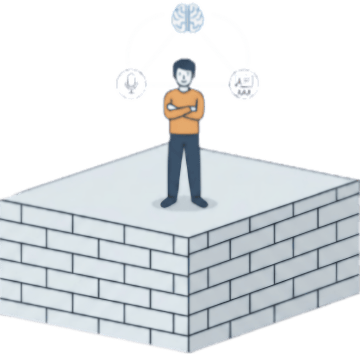
understand the cycle of confidence and anxiety
The first step to building genuine confidence is understanding the cycle that most speakers enter without realizing it. The cycle begins with anticipation, which triggers doubt about performance. Doubt increases physical symptoms like tension or a fast heartbeat. Those symptoms then reinforce the belief that something is going wrong. The cycle continues until small fears grow into a large sense of pressure.
Breaking this cycle requires clarity, not force. When you recognize the pattern early, you can interrupt it. This interruption is what builds confidence over time. The more you interrupt the cycle, the more your brain learns that speaking situations are manageable.
You do not need to perfect the moment. You only need to recognize the pattern and take steps that bring control back to you. Repeating this creates a long term shift in how your mind responds to attention and uncertainty.
how preparation strengthens confidence without mixing topics
Preparation plays a central role in confidence, but here we keep it focused strictly on its psychological effect rather than the techniques that appear elsewhere in the documentation. At the confidence level, preparation gives your mind proof that you are ready. When your mind holds this proof, it reduces doubt and increases your sense of control.
The most helpful form of preparation for confidence is familiarity. Becoming familiar with your content reduces the sense of risk. You can achieve this familiarity by reviewing your ideas in simple ways that do not depend on structure or delivery. For example, speaking your ideas aloud in your own words helps your mind understand that you can express the message clearly without pressure.
This type of preparation is not about crafting the perfect outline, script, or delivery plan. Those appear in other sections. Here, preparation is about psychological grounding. It tells your mind that you know what you are talking about and that you can communicate it even if things do not go perfectly.

reframe the thoughts that weaken confidence
Your thoughts shape your internal state long before you take a single step toward an audience. People who struggle with confidence often experience patterns like magnifying mistakes, fearing judgment, or assuming that nervousness means failure. These thoughts can feel automatic, but they are not fixed. You can train your mind to replace them with more accurate and supportive interpretations.
Reframing begins by noticing your default thoughts without fighting them. Once you identify a pattern, offer your mind a different interpretation. If you think, “I must not feel nervous,” replace it with, “nervous energy is normal and it will settle as I speak.” If you think, “the audience is judging me,” replace it with, “the audience wants clarity and I can give them that.” These reframes are simple but they shift your mind toward a calmer internal state.
The goal is not to create fake positivity. The goal is to create balanced thinking that supports your performance. Confidence grows when your thoughts match reality instead of feeding fear.
internal exercises that build steady confidence
Building confidence is a skill and every skill improves through practice. These exercises focus only on internal grounding and mental readiness. They do not overlap with voice, delivery, body language, or performance topics found elsewhere in the documentation.
1. the comfort review Once a day, choose a small idea you care about and speak about it for 30 seconds at a comfortable pace. No structure required. No performance needed. This builds trust in your ability to speak without pressure.
2. the calm reset Before a speaking moment, pause for five slow breaths with your attention on the air leaving your body. This focuses your mind inward and resets tension without relying on advanced techniques.
3. the supportive statement Create a single sentence that reminds you of your capability, such as “I can express my ideas clearly.” Repeat it before speaking. Your brain responds strongly to repeated internal cues.
4. the reality check After you speak, write down one thing that went well and one thing you want to improve. This builds realistic self assessment, which is essential for long term confidence growth.
Each of these exercises teaches your mind that speaking is manageable and that you are capable of guiding your own experience. Small steps compound into long term confidence.
confidence that lasts beyond one moment
Confidence is not built in a single event. It develops through repetition, awareness, and honest reflection. Every time you face a speaking situation, you add another experience to your internal record. With enough experiences, your mind begins to see speaking as familiar instead of threatening.
Long term confidence grows when you consistently apply the basics. Recognize your nerves without fearing them. Prepare for familiarity rather than perfection. Reframe thoughts that distort reality. Practice internal exercises that build calm. These elements work together to create a balanced, steady confidence that supports every speaking situation.
In time, you will discover that confidence is less about performing flawlessly and more about trusting your ability to stay present, stay clear, and stay grounded. That trust is what makes a speaker strong.