Overcoming Public Speaking Anxiety
Your Guide to Conquer Glossophobia

What Is Public Speaking Anxiety
Public speaking anxiety also known as glossophobia is the intense fear or dread of speaking in front of an audience. It's not just nerves. It's a recognized form of social anxiety disorder where the core fear is of negative evaluation or judgment by others.
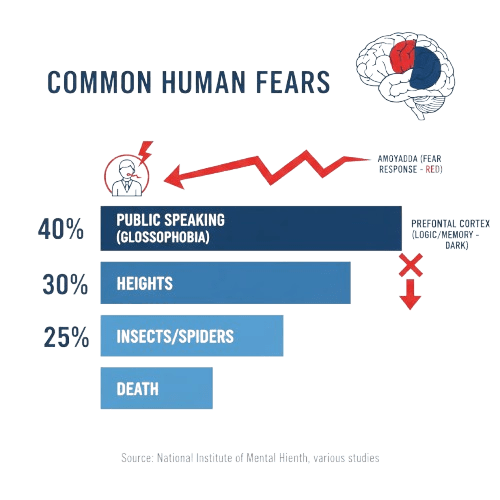
This fear is remarkably common. Studies suggest it affects about 40% of the population. For many the fear of public speaking ranks higher than the fear of death spiders or heights. Whether you're a student a professional or someone giving a wedding toast this anxiety can feel like an insurmountable barrier.
The good news is that feeling this way is normal and you are not alone. Even experienced speakers feel it. The key difference is they have learned to manage it. This guide will show you how.
Why Your Brain Triggers a Panic Response
When you step in front of an audience your brain can react as if you're facing a physical threat. This is the fight-or-flight response orchestrated by the amygdala. Your heart races palms sweat and mind may go blank. This isn't a flaw. It's a primal survival mechanism.
Evolutionary psychologists link this to our tribal past. Being isolated from the group meant danger. Speaking alone in front of others unconsciously triggers that ancient fear of rejection. Your modern brain is using an old defense system for a non-life-threatening situation.
This response directly impacts your prefrontal cortex. That's the brain region responsible for memory retrieval and logical thought. Under anxiety it can literally “freeze” making it hard to recall your prepared words. This is the science behind the dreaded “brain freeze.”

The Hidden Cycle of Avoidance
Avoidance is the most tempting but damaging response to this fear. Skipping a presentation dropping a class or staying silent in meetings provides immediate relief. However it reinforces the brain's belief that public speaking is dangerous.
This creates a negative feedback loop. Each avoided opportunity makes the fear bigger in your mind. You miss the chance to collect evidence that you can survive and even succeed. The only way to break this cycle is through safe gradual exposure. Start small to teach your brain a new story.
Proven Preparation to Reduce Anxiety
Thorough preparation is your strongest shield against anxiety. It builds a foundation of confidence that anxiety cannot easily shake. This isn't about memorizing a script word-for-word. That creates pressure and increases panic if you lose your place.
Instead focus on mastering your material. Know your key points and the flow of your talk. Practice speaking from bullet points or a mind map. Time yourself repeatedly. Practice in a setup similar to the real one. Stand if you'll stand. Use your notes if you'll use them.
Also prepare for the worst-case scenario: a brain freeze. Have a recovery plan. Practice pausing taking a slow sip of water glancing at your notes and restarting from your next key point. Knowing you can handle a stumble removes its terror.
Immediate Physical Calming Techniques
When anxiety spikes your body is in high-alert mode. You can use physical techniques to signal safety to your nervous system. The goal is to activate the parasympathetic nervous system which promotes calm.
Diaphragmatic Breathing: Place one hand on your chest and one on your stomach. Breathe slowly and deeply so that only your lower hand moves. Aim for longer exhalations than inhalations. Do this for 60 seconds before you speak.
Power Posing: Adopt a confident expansive posture for two minutes before going on stage. Research suggests this can reduce cortisol and increase feelings of confidence.
Grounding: If you feel dizzy or detached focus on physical sensations. Press your feet firmly into the floor. Feel the texture of your notecard. This brings you back to the present moment.
Cognitive Strategies to Reframe Fear
Your thoughts fuel your anxiety. Cognitive restructuring involves identifying and changing these thought patterns. You don't need to eliminate fear. You need to prevent it from hijacking your performance.
Relabel the Sensations: That flutter in your stomach isn't fear. It's energy and excitement. Your racing heart isn't panic. It's your body preparing to deliver a great performance. This simple reframe can change your emotional experience.
Lower the Stakes: You are not performing open-heart surgery. The goal is to communicate an idea not to achieve perfection. Aim for connection with your audience not flawlessness.
Focus Outward Not Inward: Anxiety turns your attention inward. Shift it outward to your message and your audience. Think “What value can I give them?” instead of “How am I doing?”
In-the-Moment Recovery Guide
What do you do when panic hits mid-speech? Have a simple reset protocol. This is your emergency toolkit.
1. Pause and Breathe: A silent pause feels like an eternity to you but reads as confidence to the audience. Use it to take one deep diaphragmatic breath.
2. Anchor Yourself: Find a friendly face in the audience. Make eye contact and speak directly to that person for a sentence or two. This makes the situation feel like a conversation.
3. Use a Bridging Phrase: If you lose your train of thought use a simple phrase to buy time. “Let me emphasize this another way…” or “The key point here is…” Then check your notes.
Remember the audience is on your side. They want you to succeed. They likely will not notice most of your internal turmoil.
Building Long-Term Resilience
Overcoming public speaking anxiety is not about one perfect speech. It's about building resilience through consistent practice in low-stakes environments.
Seek out micro-speaking opportunities daily. Explain your work to a friend. Ask a question in a meeting. Read an article out loud. The goal is to normalize the act of speaking.
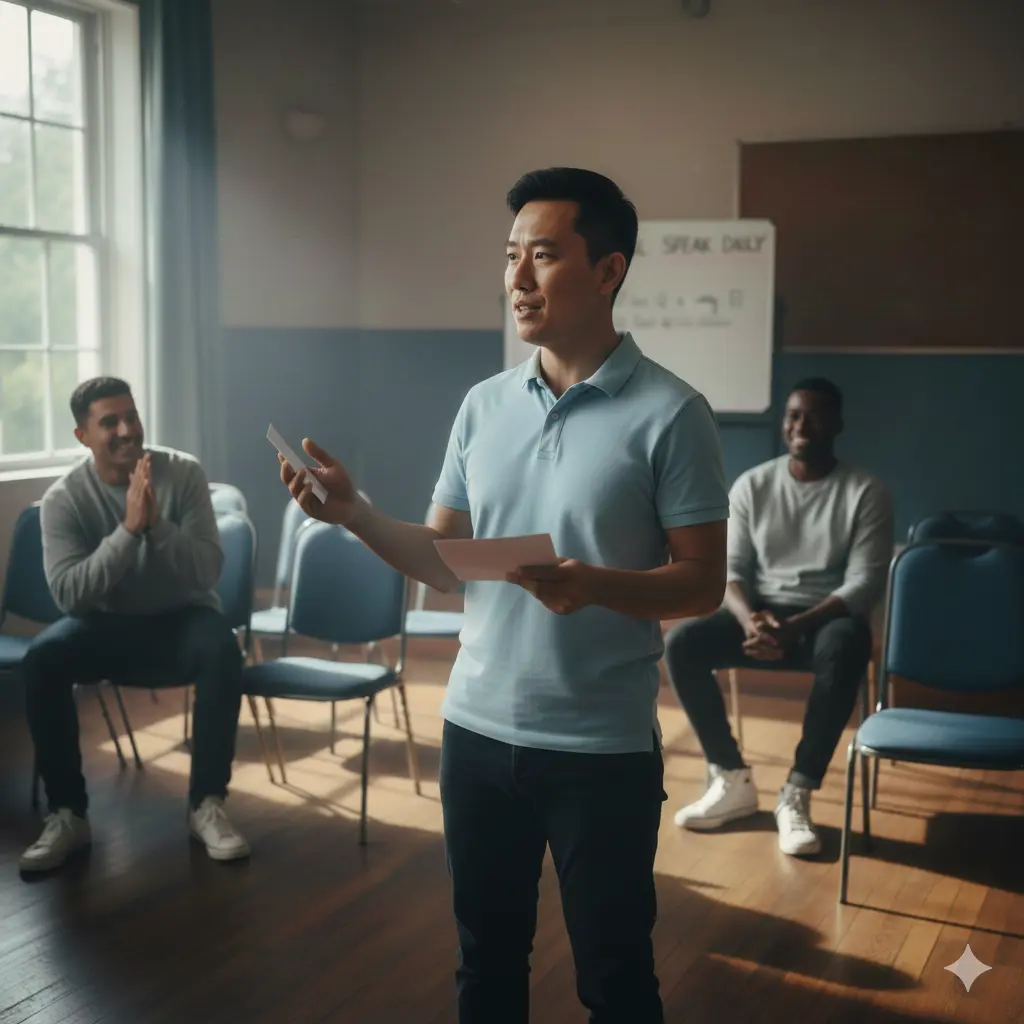
Consider joining a supportive practice group. Structured environments provide safe spaces to fail and learn. Each positive experience rewires your brain's association with speaking.
Finally track your progress. Note what helped. Recognize that the anxiety may never fully vanish but your ability to function with it will grow exponentially. You are building a skill and that takes time and deliberate practice.